

February 26, 2021
Secure & Save your Data in a Better Way
Cloud services have changed the way businesses save and backup data. A few years back when businesses largely depended on their local servers to save data. Many enterprises are nowadays buying a cloud server space from companies specializing in cloud technology, to backup all their valuable data. Data saved on the cloud are not only easy to access but also safe and secure. To ensure backing up your data is seamless and useful, you can buy such a tool as MySQL automatic backup so that your data will be saved as soon as they are digitalized. These will save your business time and resources. Below are six reasons why you should backup your data online. 1. Affordable Cloud backup services Small and medium businesses work on a very tight budget. Fewer resources are allocated to backing up data than other core departments. You do not have to pass over the cost of
February 25, 2021
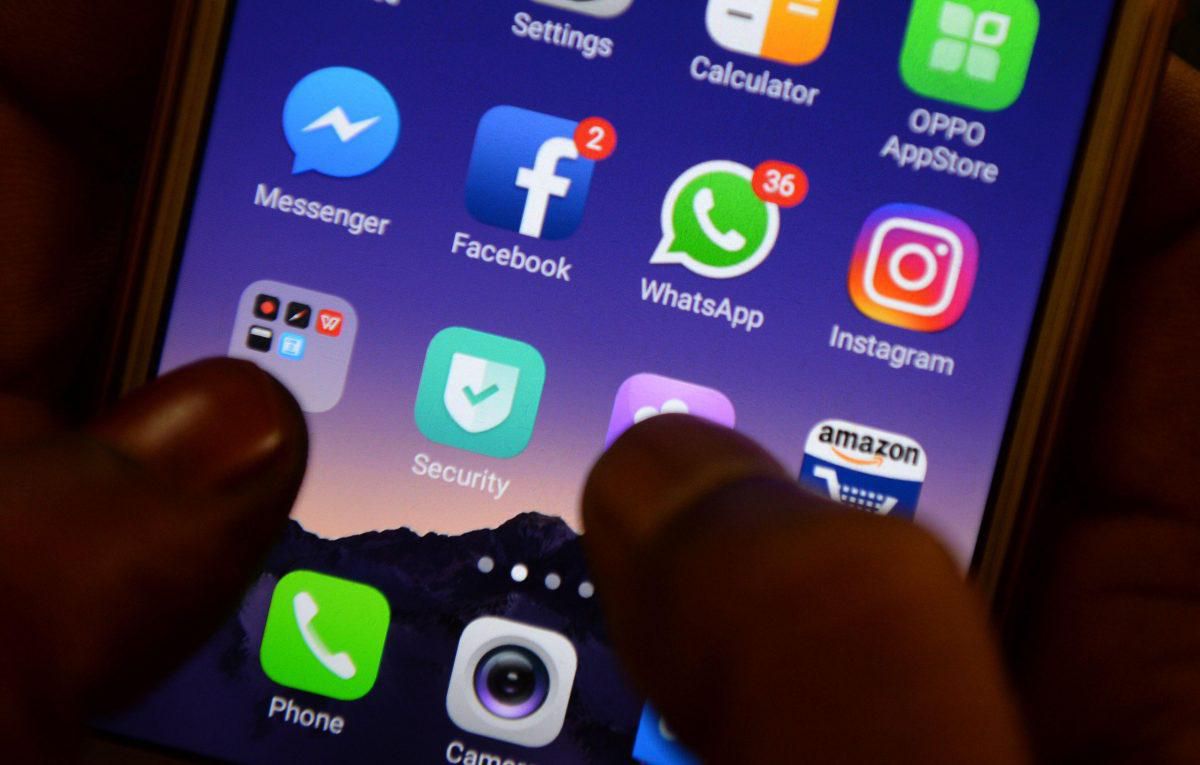
Stricter rules for social media
India has announced new regulations for social networks and other web services in the country, particularly “significant social media” companies with large user bases, like Facebook, Twitter, and Instagram. India’s Ministry of Electronics and Information Technology (MEITY) announced the rules today. They require social media companies to establish a “grievance redressal mechanism” for users, including official “grievance officers” who acknowledge complaints within 24 hours and resolve them within 15 days. Services must also remove nudity and sexually explicit content within 24 hours of a user flagging it. “Significant social media intermediaries” face additional responsibilities. These companies must appoint India-based officials that work with law enforcement and publish a monthly report on their moderation activity. “Significant” messaging-focused services must also be ready to identify the “first originator” of a message — a regulation likely aimed at Facebook’s highly popular WhatsApp service. Indian regulators have previously asked WhatsApp to identify the sources of anonymous rumors that have

February 24, 2021
Silver Sparrow Malware
Approx. 30,000 Macs in 153 countries have been infected with a new malware strain that security researchers are calling Silver Sparrow. Discovered by researchers at Red Canary, the malware has been sitting on it hosts waiting for a payload that never arrived. “Though we haven’t observed Silver Sparrow delivering additional malicious payloads yet, its forward-looking M1 chip compatibility, global reach, relatively high infection rate, and operational maturity suggest Silver Sparrow is a reasonably serious threat, uniquely positioned to deliver a potentially impactful payload at a moment’s notice”. Although researchers at Malwarebytes have identified 29,139 macOS endpoints infected by Silver Sparrow, many more machines could be hit by the malicious software, maintained Tony Anscombe, chief security evangelist at Eset. “Based on what was first seen, the malware may be more widespread than is called out in the disclosure,””The 30K number comes from a single security vendor as opposed to the entire macOS environment.” However, Malwarebytes

February 23, 2021
Google Is Making Sign Language More Accessible In Video Calls
https://hmg-h-cdn.hearstapps.com/videos/video-mp4-476x280-1606260045.mp4Zoom, Microsoft Teams, and Google Meet are all essential work-from-home tools, but for people with hearing disabilities, these apps can be troublesome to navigate, and even downright inaccessible. During a video call, for example, the software is smart enough to highlight the person who is actively speaking. In a grid layout, that might mean a yellow square surrounds the speaker’s thumbnail, or in a full-screen layout, it might look like the speaker’s face taking over. But when a person is signing, the software doesn’t give them any special recognition, making it difficult for them to have the floor. To bridge that gap, Google AI researchers have presented a real-time sign language detection model that can identify people who are signing—as opposed to lifting up their arm to brush a hair from their face, or to cover their mouth while coughing—with up to 91 percent accuracy. The scientists presented their paper at the virtual Sign Language

February 20, 2021
Hook your brain directly to computers
Elon Musk, the futurist billionaire behind SpaceX and Tesla, outlined his plans to connect humans’ brains directly to computers describing a campaign to create “symbiosis with artificial intelligence.” He said the first prototype could be implanted in a person by the end of next year. Arriving at that goal “will take a long time,” Musk said in a presentation at the California Academy of Sciences in San Francisco, noting that securing federal approval for implanted neural devices is difficult. But testing on animals is already underway, and “a monkey has been able to control the computer with his brain. Musk founded Neuralink Corp. in July 2016 to create “ultra-high bandwidth brain-machine interfaces to connect humans and computers.” The company said in 2017 that its initial goal was to devise brain interfaces to alleviate the symptoms of chronic medical conditions. It’s widely presumed, however, that Musk is characteristically after something much larger.